


Why Drainage Solutions Matter Before You Invest in New Landscaping
Before you add new beds, sod, or hardscapes, make sure your yard can move water the right way. In Brighton, MI, spring rains, snowmelt, and clay-heavy soils can leave water sitting where it should not. That is why fixing drainage first is the smartest move you can make. For many homes, that means planning drainage trenching in Brighton, MI before the first plant or paver goes in.
When drainage is solved up front, your lawn stays healthier, patios last longer, and your foundation stays dry. If you already see puddles around downspouts, soggy turf along fence lines, or damp basement walls after storms, address those clues now so your new landscape does not struggle later.
The Risk Of Landscaping Before Fixing Drainage
Landscaping on top of a drainage problem is like painting over a leak. It hides the issue for a moment but the damage returns. Plants drown, mulch washes out, and edges slump. Patio joints open and heave after freeze-thaw cycles. In older areas near Brighton Lake and downtown Brighton, small lots and mature trees can make low spots worse. Newer subdivisions in Genoa Township, Hamburg Township, and Green Oak Township sometimes face compacted subsoil from construction that traps water near the surface.
Left alone, water will always find the easy path. Without a designed route to carry it away, that path may be toward your foundation, into planting beds, or across sidewalks where ice can form in winter. A planned solution such as drainage trenching creates a reliable corridor that quietly handles stormwater out of sight.
How Drainage Trenching Protects Your Investment In Brighton, MI
Drainage trenching is a targeted way to intercept and move water. Trenches can collect surface flow along the low edge of a yard, tie into downspout extensions, or relieve saturated zones that never quite dry out. In Livingston County’s common clay and clay-loam soils, water lingers after heavy weather. A trench system with the right pipe, fabric, and washed stone gives that water a dependable route so it does not sit where it harms roots or undermines hardscapes.
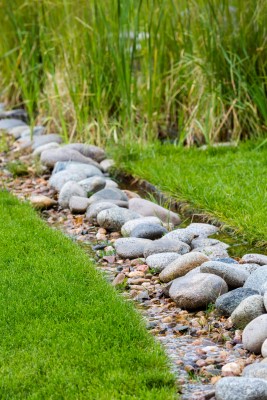
Done right, trenching blends into the design. Grates or decorative stone can sit flush with turf, and discharge points can be placed in approved daylight spots or integrated with other landscape features. Your future beds, pavers, and lawn get a stable base because water stops piling up where you do not want it.
Signs Your Yard Needs Better Drainage
- Standing water that lingers a day or more after rain, especially along fence lines, walkways, or at the base of slopes
- Grass that thins or turns yellow in the same wet spots every spring and fall
- Mulch or soil washing out of beds after storms, or silt lines around plantings
- Downspouts that dump near foundations with damp walls or musty smells indoors
- Heaved pavers, frost damage, or ruts that keep returning even after repairs
Trenching, French Drains, Or Grading: What Fits Your Yard
Every lot is different. Some homes near Woodland Lake and Brighton Lake need to intercept subsurface water that seeps laterally through the soil. Others simply need a safe path for roof runoff to exit the yard. Your solution might include:
- Trench drains or channel drains to catch surface water along patios or driveways
- French drains to relieve soggy turf or the toe of a slope
- Regrading or shallow swales to steer water toward daylight
- Catch basins and drain tile to collect water at low points
- Downspout extensions that connect to a buried line and pop-up emitter
A good plan solves the source, not just the symptom. That is why a site walk, simple elevations, and a look at soil conditions come first. After that, trench depth, pipe size, and discharge location are chosen to match how your property actually handles a storm.
Local insight: Around Brighton and Howell, clay soils shed water fast at the surface but hold moisture beneath. Designing your drainage before new plantings helps roots establish without sitting in cold, wet soil after spring thaws.
What To Expect From A Professional Drainage Assessment
With RainMaker Irrigation & Landscaping, a trained tech studies how water enters and leaves your yard today. We note roof areas, downspout locations, soil type, and the low points along property lines. We also look at hardscape edges, lawn grades, and where ice forms in winter. From there, we map a primary route for stormwater and a safe discharge area.
Trenching plans typically include protective fabric around washed stone, correctly sloped piping, and stable backfill that will not settle. Where needed, catch basins can collect debris before it reaches the pipe. The finished grade is restored, and the surface is matched to the surrounding landscape so the system does its work without drawing attention.
For issues that center on roof runoff or surface flow, we may recommend connecting downspouts to a trench system. If the problem is deep saturation in a flat yard, a perforated run with stone and fabric often provides steady relief. If grading is the main culprit, gentle reshaping can complement the trench and keep water moving the right way.
Seasonal Timing And Soil Realities In Brighton, MI
Timing matters. In southeast Michigan, late spring through early fall usually offers the most predictable window for excavation and restoration. This helps the trench settle and turf reestablish before freeze. Brighton and Howell also see quick snowmelt events in March and April. If you plan new beds or sod for late spring, schedule drainage work first so your install window stays on track.
Clay soils can look dry on top and still be wet a few inches down. A shallow puddle today may point to deeper saturation tomorrow. That is why addressing drainage before landscaping gives your plants a head start and protects patios from frost movement as the seasons shift.
How Drainage Works With Irrigation And New Plantings
Good drainage and smart watering go hand in hand. After trenching, an efficient sprinkler layout provides the right moisture without overwatering low spots. If you are upgrading sprinklers, explore options on our irrigation services page so your system and drainage plan support each other from day one.
Soil health also improves when water moves correctly. Aeration can help compacted lawns breathe once standing water is under control. For more on why opening the soil matters, read this related post from our team: how you will benefit from professional lawn aeration.
If your project includes sod or new beds, stable grades and a working drain path keep roots from sitting wet during their most vulnerable weeks. That is how your landscape looks finished on day one and still looks great after the first Brighton thunderstorm of summer.
Design Details That Make Or Break Drainage
Small choices have big outcomes. Use washed stone sized for the pipe and soil, and keep a continuous fabric barrier to prevent fines from clogging the system. Maintain positive slope on the line and protect inlets with grates that are easy to clear after storms. Think about future maintenance access near pop-up emitters or daylight outlets, and keep those ends out of heavy traffic areas.
Avoid directing water onto adjacent properties or public walkways. A simple tweak to a discharge point can prevent nuisance puddles where people walk or where your neighbor’s yard is lower than yours. Your RainMaker Irrigation & Landscaping designer will propose routes that respect your site and the surrounding area.
When To Call A Professional
Choose a local team that understands Livingston County soils, frequent spring downpours, and winter freeze-thaw. Look for careful assessment, clear explanations, and clean restoration. If you are planning new sod, pavers, or plantings, talk with us first about drainage trenching so your landscape dollars work harder and last longer.
Ready To Protect Your Landscape
Your yard is an investment. Give it the foundation it deserves. Start with a drainage plan and install it before the first plant or paver. Then enjoy a landscape that looks good and works well through every Brighton season. To get started, call RainMaker Irrigation & Landscaping at 734-564-1373 or ask our team about professional drainage trenching for your property.
If you are researching next steps and want a broader view of services that support healthy landscapes, browse our site beginning with drainage trenching in Brighton, MI. From irrigation tuning to lighting and sod, we can help design a plan that fits your home and the way you live outdoors.







